The Role of the Nath Tradition in the Present Age
The modern role of the Nath tradition can be clearly understood through the scholarly review written by Padma Bhushan & Maharashtra Bhushan Dr. Vijay Bhatkar, Chancellor of Nalanda University. His reflections, based on his study of the Nath lineage and the work documented by Shri Narendranath Maharaj in *Yogeshwaranandanchya Chhayet*, reveal why the Nath Sampradaya holds extraordinary relevance in the present age.
Ancient Roots of Spiritual Science
Spirituality (Adhyatma) is among the most ancient sciences of humanity. The sages of early India possessed vast reservoirs of experiential wisdom long before modern science emerged. Today, we celebrate human travel to the moon, yet yogic traditions describe ancient masters who could achieve similar feats through spiritual mastery. Modern quantum physics increasingly supports the idea that yogic experiences are not imaginary but reflect deeper realities that science is only beginning to explore.
Many spiritual phenomena cannot be shown externally, but they can be directly experienced. When a Guru invokes transformation through pure intention, it is not “magic”; it is a science built on discipline, lineage, and inner mastery.
The Nath Tradition Across the Ages
India has always been home to great yogis. The science of yoga often transcends the limits of modern physics. For example, every year during the Alandi–Pandharpur pilgrimage, the temple spire of Saint Dnyaneshwar gives a subtle, gentle signal that marks the beginning of the *vari*. This movement of a solid stone structure cannot be easily explained by classical physics, yet quantum theory admits that such events are possible.
As creation unfolded, the four Yugas—Satya, Treta, Dwapar, Kali—were established. Human tendencies and social conditions vary drastically among them. Kaliyuga was formed differently, with greater inherent instability and suffering. Seeing the hardships that humanity would face, Lord Krishna established the Nath tradition to preserve balance and guide human beings through the darkness of this age.
The Reality of Divine Incarnation
No one today can claim to have witnessed God in cosmic form. Yet countless seers have directly experienced divine presence. Just as we believe in ancestors we have never met because earlier generations interacted with them, similarly millions of people across ages lived with Rama and Krishna. Their actions were recorded by those who walked with them. Thus, Rama and Krishna are not concepts; they were historical beings recognised as divine incarnations.
Why Krishna Created the Nath Tradition
Before completing His earthly mission, Krishna foresaw the nature of Kaliyuga: – good people would face unjust suffering, – destructive tendencies would rise, – natural calamities would increase, – the five elements would remain constant but their effects on life would become unstable.
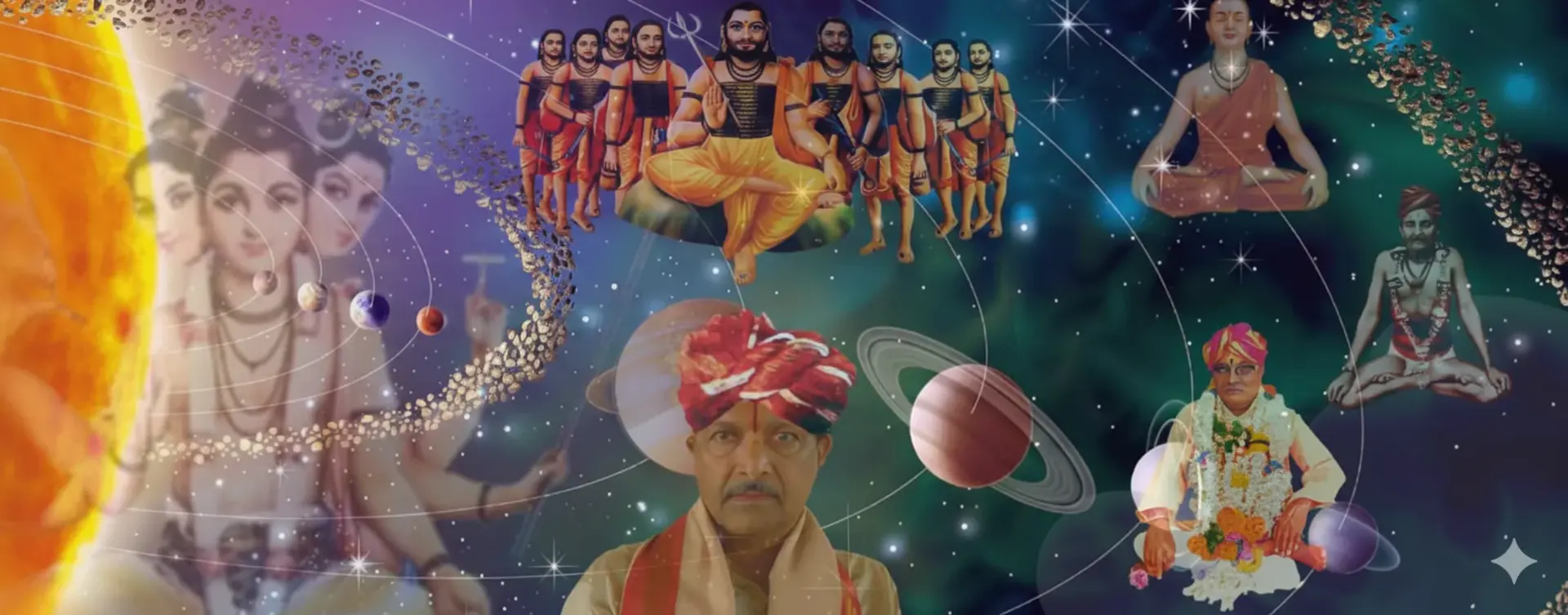
To counter these imbalances, Krishna gathered the Nine Narayanas (Navanarayanas) and established the Nath lineage specifically to support humanity in Kaliyuga.
The Lineage of Power and Purpose
Shri Narendranath Maharaj’s work *Yogeshwaranandanchya Chhayet* explains: why the Nath tradition was created, its cosmic role, its spiritual authority, and how it has operated continuously across centuries. The Nath panth holds knowledge even modern science cannot explain.
For example, a-yoni birth (a divine birth without biological parents) is described in yogic literature. Such beings grow like ordinary children, but a divine force works through them, performing actions that defy the normal laws of nature. Even gods are said to honour the spiritual authority of such yogic births.
The lineage continues through both divine and human forms. Shiva and Vishnu themselves are said to have manifested as Nivritti Nath and Jnan Nath. Earlier Nath yogis practiced strict Hatha Yoga; later, Jnan Nath (with Vishnu's qualities) introduced the path of devotion, altering style and language but not the power or purpose of the tradition.
Continuation Through History
From Jnan Nath to Vishwanath, the lineage expanded its influence. Gahini Nath transferred full spiritual command to Nivritti Nath. In the modern era, Madhav Nath brought this divine current from Chitrakoot to Devgaon-Rangari (1936). Before taking samadhi, he entrusted all authority of the Panth to Vyankatnath Maharaj, who continued the work with extraordinary spiritual power.
Today, the Nath tradition continues through Shri Nath Shakti Peeth, Akola, under Shri Narendranath Maharaj, whose disciples still experience the same divine energy once displayed by Vyankatnath Maharaj.
What the Tradition Offers Today
The Nath tradition does not seek followers, does not promote caste or religious divisions, and offers guidance only to sincere seekers. It respects all spiritual paths, yet provides deep transformation to those who genuinely desire it. Its mission is simple: inner upliftment and preservation of balance in Kaliyuga.
As Dr. Bhatkar concludes:
“Yogeshwaranandanchya Chhayet is an invaluable reference for anyone studying the Nath tradition.”