All Gods Are Equal
The origin of the entire creation — the whole cosmos — lies in the Vedas. From the Vedas emerged the universe, and within it all living and non-living beings. Humans, animals, birds and every creature belong to the realm of life, while rivers, mountains, valleys and landscapes form the natural environment. In this vast cosmos, all life and all of nature function automatically according to an inherent order and discipline. The universe is self-regulated and governed by unchanging natural laws.
No object in creation can alter its own essential nature. It behaves only according to the characteristics assigned to it within the original cosmic design. A marigold can never become a rose; a rose can never become jasmine. Each follows its own inborn essence. This natural law cannot be changed by anyone.
The Law of the Yugas
When creation began, the four yugas — Satya, Treta, Dvapara and Kali — were also formed, each with its own inherent qualities and limitations. Once created, not even Brahma can alter the structure or nature of a yuga. Among them, Kali Yuga was formed with the lowest, most challenging qualities. Even Brahma cannot redesign or improve it now. This is the fundamental principle of the cosmos: the structure once created cannot be undone or modified by any deity.
The Threefold Divine Functions
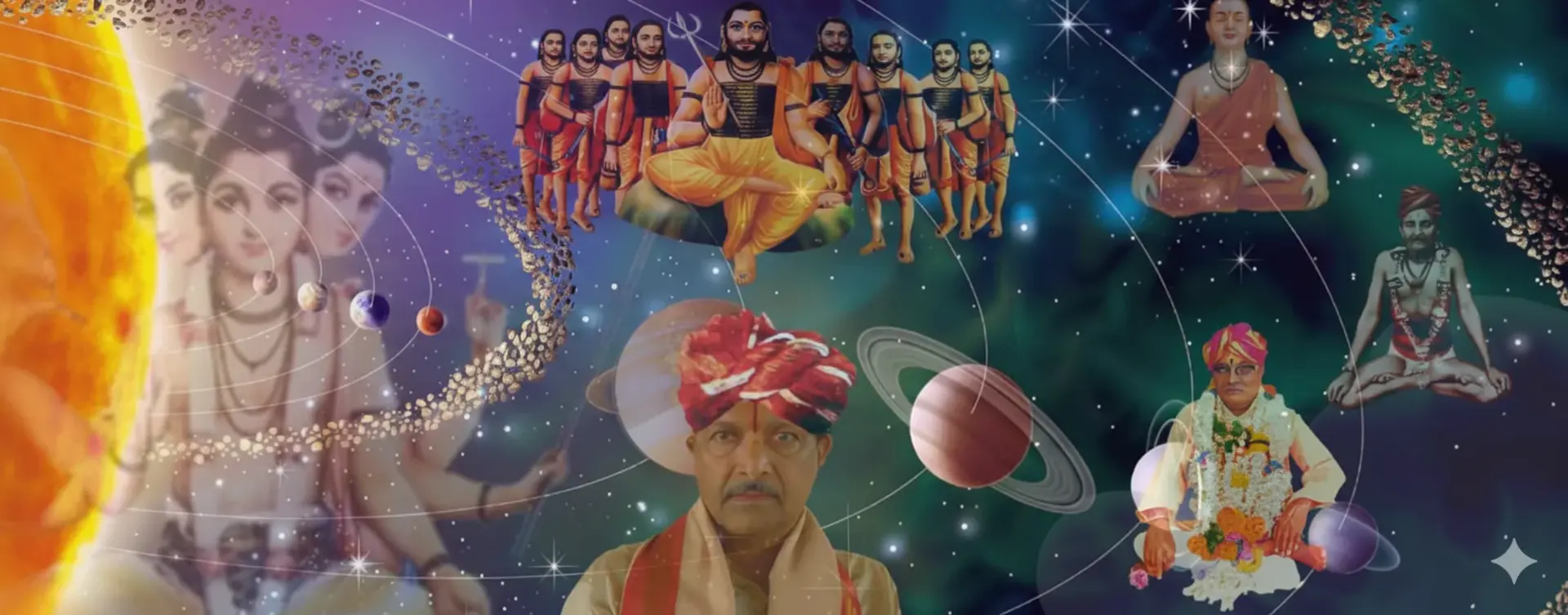
After creation, Brahma, Vishnu and Mahesh (Shiva) were entrusted with three great cosmic functions: creation, preservation and dissolution. All deities share the same *essential* divine power; none is superior or inferior in strength. However, each deity must operate within the boundaries of the function assigned to them. Their powers are equal, but their domains of authority differ.
Even though God can do anything, no deity is permitted to step outside the nature-given limits of their designated work. Within their own sphere of authority, they can accomplish anything; outside it, they cannot intervene. Thus, no god is “lesser” or “greater.” They are equal in divine power; the differences lie only in their responsibilities.
Understanding Domain-Based Divine Action
- Ganesha has the power to grant strength, intelligence, devotion or strategy — yet he must act within the limits of his assigned domain.
- Hanuman too can bestow knowledge and wisdom — but he also functions within the cosmic boundaries set for him.
In the same way, Brahma, Vishnu and Mahesh are distinct deities, each responsible for one universal function: Brahma for creation, Vishnu for sustenance and Shiva for dissolution. These roles define their field of action. The divine essence is one; the expression of that essence is many. Thus the ancient wisdom declares: All Gods Are Equal.