The Daily Life, Worship, and Spiritual Practice of the Nath Tradition
When we look at the daily routine of the Nath masters, especially Shri Vyankatnath Maharaj, we see that their lifestyle is completely different from that of ordinary people. Most people cannot end their day without a full night's sleep, but in the presence of Narendra—who first met Maharaj in 1955 and became close to him in 1972—an extraordinary truth was revealed: Maharaj had not slept even once in his entire life until 1972. At that time he was 68 years old. From the age of ten, when he went to the Himalayas, he lived entirely without sleep.
When Narendra once requested Maharaj to rest during the afternoon and even prepared a place for him, Maharaj became upset and said: “I have never slept until today. How can you ask me to sleep while the sun is in the sky? It is not right to sleep during the day.” Narendra was astonished and asked how this was possible. Maharaj explained: “If one guides the breath (prana) into the Brahmarandhra and remains there for even half an hour, the body receives the same refreshment as long sleep. Once the mind becomes completely steady, physical sleep is unnecessary.”
At night he would lie down only for appearance. After disciples massaged his body, he sat upright in yogic posture throughout the night, and at dawn his day began.
Maharaj’s Unique Personal Discipline
Even simple activities such as brushing the teeth were unusual. He never used toothpaste. Instead he used fine filtered soil mixed with natural substances to cleanse the mouth, leaving freshness and purity.
The Nath Method of Worship (Ānhik)
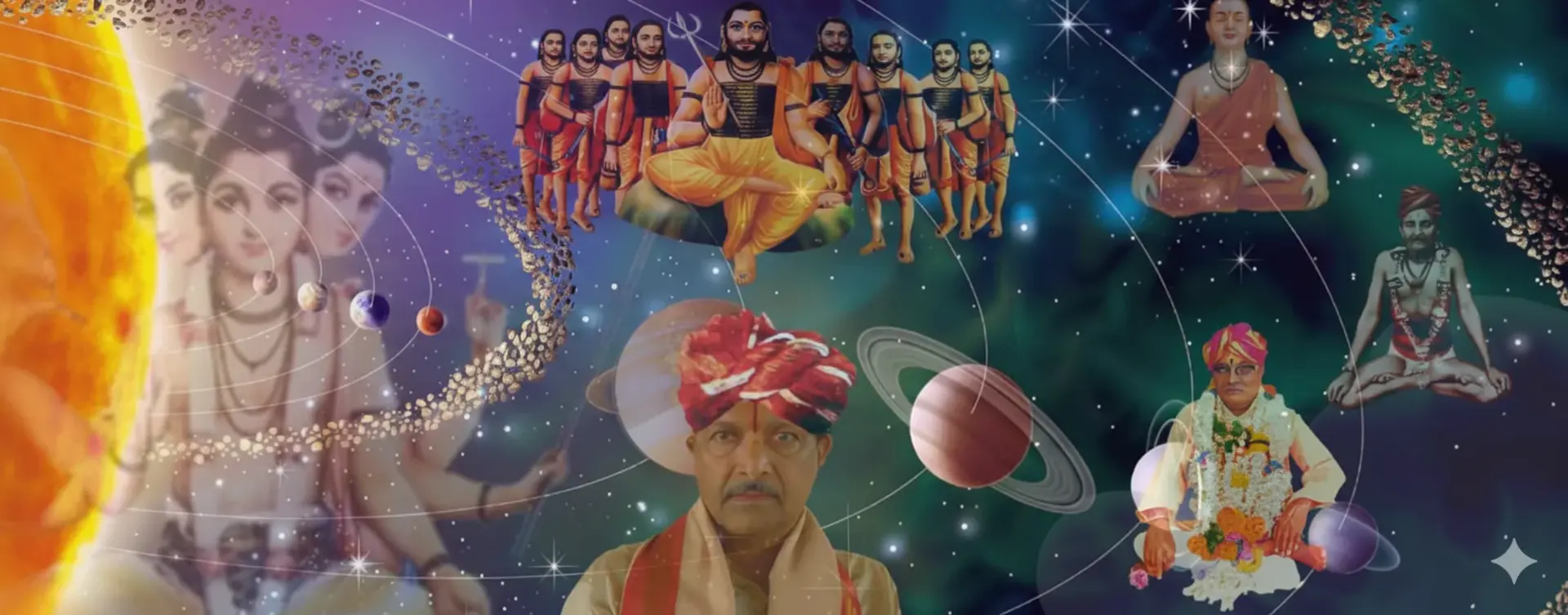
The worship method of the Nath Sampradaya is unique. While most traditions worship physical idols, Nath worship is aligned with the movement of the sun, planets, constellations, and cosmic forces. The Nath masters understand the universe through the five great elements—earth, water, fire, air, and space—and relate these directly to human life.
Shri Vyankatnath Maharaj performed Ānhik (daily worship) every morning and evening before meals. The worship platform (*chourang*) was arranged with two oil lamps in the corners, two ghee lamps beside them, a camphor lamp in the center, and a seat prepared for the cosmic deities. No physical idol was used; instead, the central object of worship was a Navagraha pouch—a symbolic cosmic diagram—and Maharaj’s Rudraksha mala, representing the structure of the universe.
Wearing clean traditional cloth, Maharaj began worship by lighting sacred incense and silently chanting powerful mantras, kavachas, and stotras. Often he performed Ānhik behind closed doors. When the door opened, devotees would see his entire body covered with sandal paste—as if a divine being had performed worship upon him.
During Ānhik he prepared a thick sacred ball of sandal paste called gandha-goli, charged with mantra energy. This was used to strengthen spiritual energy, remove obstacles, transform personality, improve destiny, and resolve complex problems. Many have personally experienced its power. Maharaj also performed abhisheka on the Navagraha pouch, while disciples recited *Gurugita* and other hymns.
Transformative Power of Nath Worship
During Ānhik the environment becomes spiritually charged. Even by simply being present, a person’s inner impurities begin to dissolve. Nath philosophy explains that the Navagrahas carry the karmic script of every being, and during worship Maharaj purified and altered these subtle influences for the welfare of his disciples. Inner clarity, devotion, and purity naturally increased.
All cosmic deities are believed to support the Nath Gurus, and during worship these divine forces become symbolically present. The sacred water (*tirtha*) given afterward carries powerful spiritual vibration. After worship, disciples performed Guru Padya-puja, followed by aarti and prayers. Maharaj personally distributed tirtha and prasad and often gave blessings or performed subtle spiritual acts at this time.
The Central Role of the Sun
In Nath worship, the Sun is the primary deity, and all other deities align with it. The Sun is considered the soul of the universe. Its energy sustains all life, and therefore Sun-centered worship is deeply significant. The Nath form of worship is rarely seen elsewhere, and everyone present experiences a profound shift in consciousness—calmness, purity, devotion, and inner upliftment naturally arise.