The Sacred Significance of the Ashwattha Tree
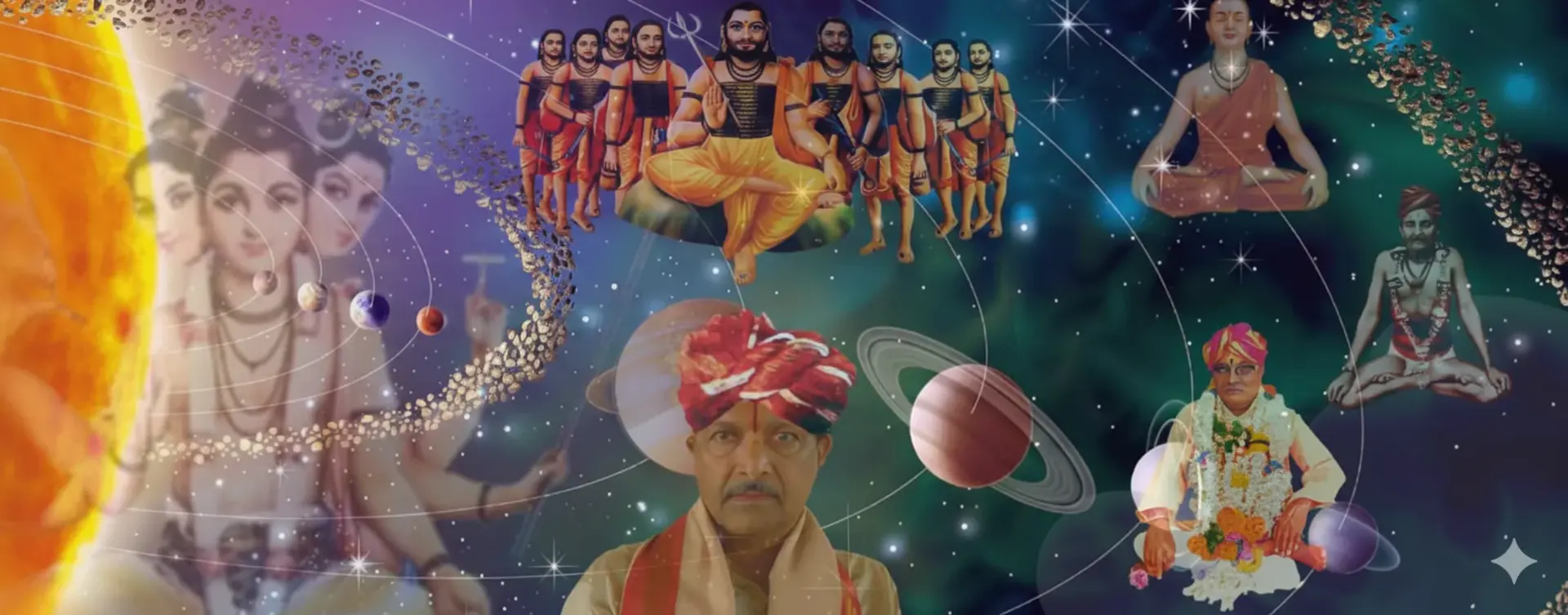
According to the history of the Nath Sampradaya, several great Nath masters from the *Gupt Nath lineage* carried out their spiritual work from Chitrakoot. After Madhavanath began his divine mission there, he later transferred the spiritual power, traditions and sanctity of that place to Devgaon (Aurangabad district). Once this sacred transfer was completed, the original Chitrakoot lineage concluded and all spiritual authority continued from Devgaon. This was done directly by Madhavanath himself. After him, Vyankatnath carried forward the same divine mission under his Guru’s command. After his Samadhi, the work of this Nath Shakti Peeth has continued *unbroken* through Guru’s grace, and even today many seekers experience the living presence of this Nath lineage. For these reasons, the Nath Shakti Peeth at Devgaon holds a unique and elevated spiritual status.
The Ashwattha Tree at the Nath Shakti Peeth
On the south-western side of this sacred Peeth stands a divinely blessed Ashwattha (Peepal) tree. The Puranas praise the Ashwattha as a Kalpavriksha, a wish-fulfilling tree. In the *Brahmanda Purana*, Lord Brahma reveals to Narada that:
- At the roots of the Ashwattha resides *Lord Brahma*.
- In the middle resides *Lord Vishnu*.
- At the top resides *Rudra (Lord Shiva)*.
Upon its branches:
- South: Lord Shiva as *Shoolpani*.
- West: Lord Vishnu in the *Nirguna* (formless) state.
- North: Lord Brahma.
- East: Lord Indra.
All these deities remain ever-present within the tree. Additionally, cows, Brahmins, sages and Vedic deities dwell at its roots; all holy rivers and the deities of the seven oceans reside on its eastern branches; and the divine sounds A-U-M (Om) exist in its root, trunk and fruit. Thus the Ashwattha is called Ashwattha Narayana, and its greatness is immeasurable.
Why the Ashwattha Is a Kalpavriksha
It is believed that the Ashwattha’s *face* is towards the south-east, where eleven Rudras and eight Vasus dwell. The Trimurti and many other deities remain within it at all times. Because of this divine presence, the Ashwattha is revered as a Kalpavriksha capable of granting both spiritual and worldly fulfilment.
Proper Worship of the Ashwattha Tree
Lord Brahma explained the rules for beginning the Ashwattha vrata:
Do not begin the vrata:
- In the months of Ashadha, Paush or Chaitra
- When Guru (Jupiter) or Shukra (Venus) are combust
- When the Moon is weak
Do not touch the tree:
- On Sundays, Tuesdays, or Fridays
- On Sankranti
- At dusk, midnight or during inauspicious tithis
- During Vyatipata or unfavourable astrological timings
Method of Pradakshina
Perform pradakshina with a pure and peaceful mind. If possible, chant the Purusha Sukta; if not, recite the Vishnu Sahasranama; and if that too is difficult, maintain silence and walk mindfully. Move slowly and steadily like a woman in late pregnancy carrying a water pot.
Benefits include:
- Merit equal to an Ashwamedha Yajna
- Removal of great sins, including Brahma-hatya (with 2 lakh pradakshinas)
- Purification of Guru-related karmic defects
- Relief from diseases
- Clearing of ancestral debts
- Reduction of fear of birth and death
- 1,000 pradakshinas remove planetary afflictions
Pradakshina performed with body, speech and mind grants the blessing of children, as declared by Lord Brahma.
Special Practices Under the Ashwattha
- On Saturdays, hold the tree and chant the Mahamrityunjaya Mantra to overcome fear of untimely death; even Shani-related problems become mild.
- Bathing under the tree on Amavasya or Thursdays removes sins equal to Brahma-hatya.
- Feeding Brahmins at its base yields immense merit.
- Chanting mantras beneath it multiplies their power.
- Vedic recitation here grants extraordinary spiritual fruits.
- Planting an Ashwattha tree liberates 42 generations of ancestors.
- Cutting the tree brings heavy sin.
- Performing Homa (fire ritual) under the tree grants the merit of a great yajna and fulfils desires quickly.
The Ashwattha at the Nath Shakti Peeth Today
Although these descriptions are ancient, their reality is still experienced today. At this Nath Shakti Peeth, countless devotees have felt the blessings of the Ashwattha tree and the presiding Nath deities. Through worship, offerings, homa and dana performed here, seekers find relief from suffering, solutions to difficulties, removal of planetary and ancestral problems, and deep inner peace. The Ashwattha remains a living fountain of divine grace.