The Birth of Dattatreya
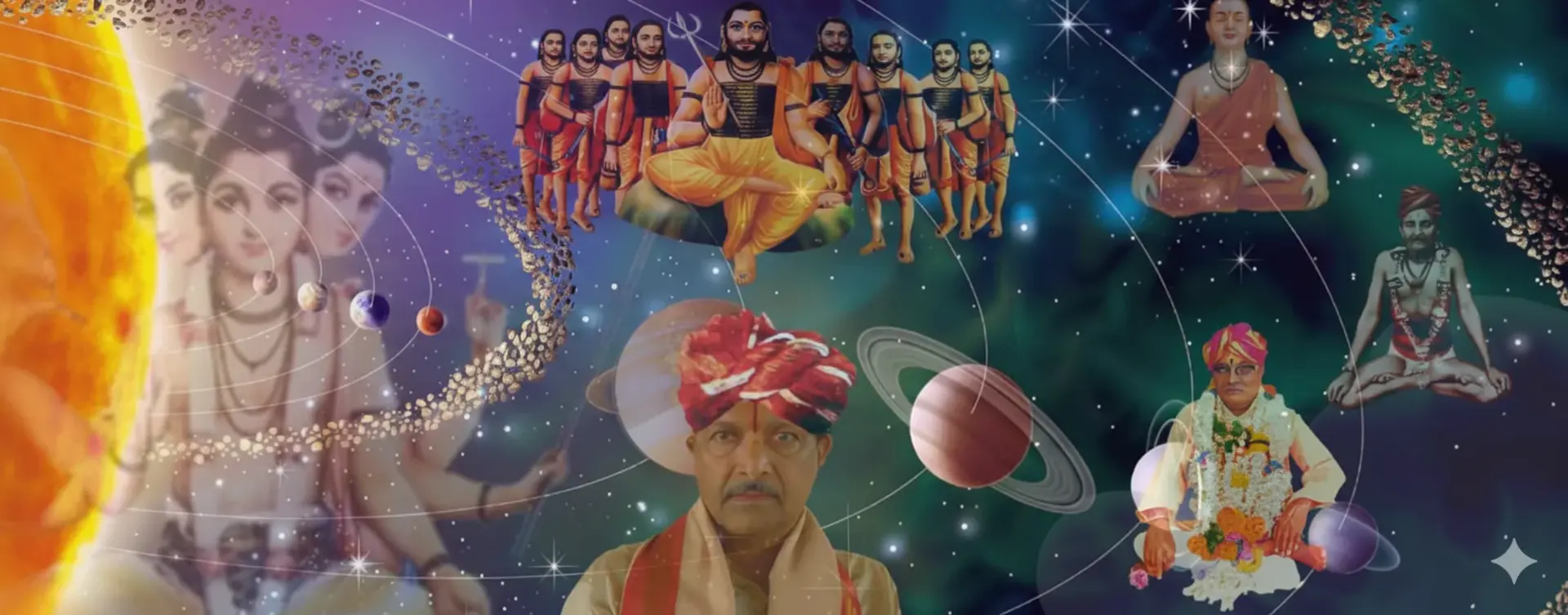
In the fourth chapter of the Guru Charitra, the divine birth of Lord Dattatreya is described. Anasuya, the supremely pure and radiant wife of Sage Atri, possessed unmatched chastity and inner brilliance. To examine her sattva, Brahma, Vishnu, and Mahesh assumed the form of Brahmins and came to test her purity. Though the story is well known, one essential point is often misunderstood: the ideas of “male” and “female” as applied to gods are human concepts. Deities have no bodily gender, nor do they behave like humans. Their appearances in scriptures are symbolic expressions of cosmic principles.
The Meaning of Sattva-Pariksha
The test conducted by Brahma, Vishnu, and Mahesh was not a test of moral purity or worldly chastity. Sattva-pariksha means examining the depth of a person’s inner clarity, innocence, humility, and spiritual transparency. A mind free from ego and filled with devotion is true divinity. When the deities asked Anasuya to serve them food without clothing, there was no trace of lust. It was a cosmic test, not a human one. Her body or beauty were not the basis of the test; what they sought to witness was the brilliance and truth of her inner purity.
To understand this, one must recall an incident from the life of Sant Dnyaneshwar. When Changdev once arrived flying on a tiger to display his yogic powers, Dnyaneshwar and his siblings were seated on a broken wall. Dnyaneshwar tapped it lightly and said, *“Come, let us go meet the great yogi!”* The wall itself moved, revealing his mastery over the elements. Changdev instantly recognized his greatness.
Another day, while Muktabai was changing clothes after bathing in the river, her cloth slipped. Changdev covered his eyes, and Dnyaneshwar said, *“He is still an unbaked pot. He has not risen above bodily feelings. How will he become a complete yogi?”* Dnyaneshwar was no ordinary saint; Vishnu had earlier declared, *“I shall incarnate as Dnyaneshwar in the Nath tradition to serve the Guru.”* Though born in a household, he was a divine being. His reaction represented the vision of a yogi—pure, detached, untouched by bodily distinctions.
Understanding the Divine Episode Correctly
The incident of Anasuya must be understood at this divine level, not through ordinary human thinking. To imagine that Brahma, Vishnu, and Mahesh did not know what would happen, or that they were unaware of Sage Atri’s spiritual power, is incorrect. Anasuya’s heart was spotless, transparent, and divine, and due to this, the three deities themselves became infants in her presence.
The deeper spiritual principle revealed here is profound: When a human being becomes truly divine within, even the gods set aside their godhood and unite with that inner purity.