Teachings of Revananath
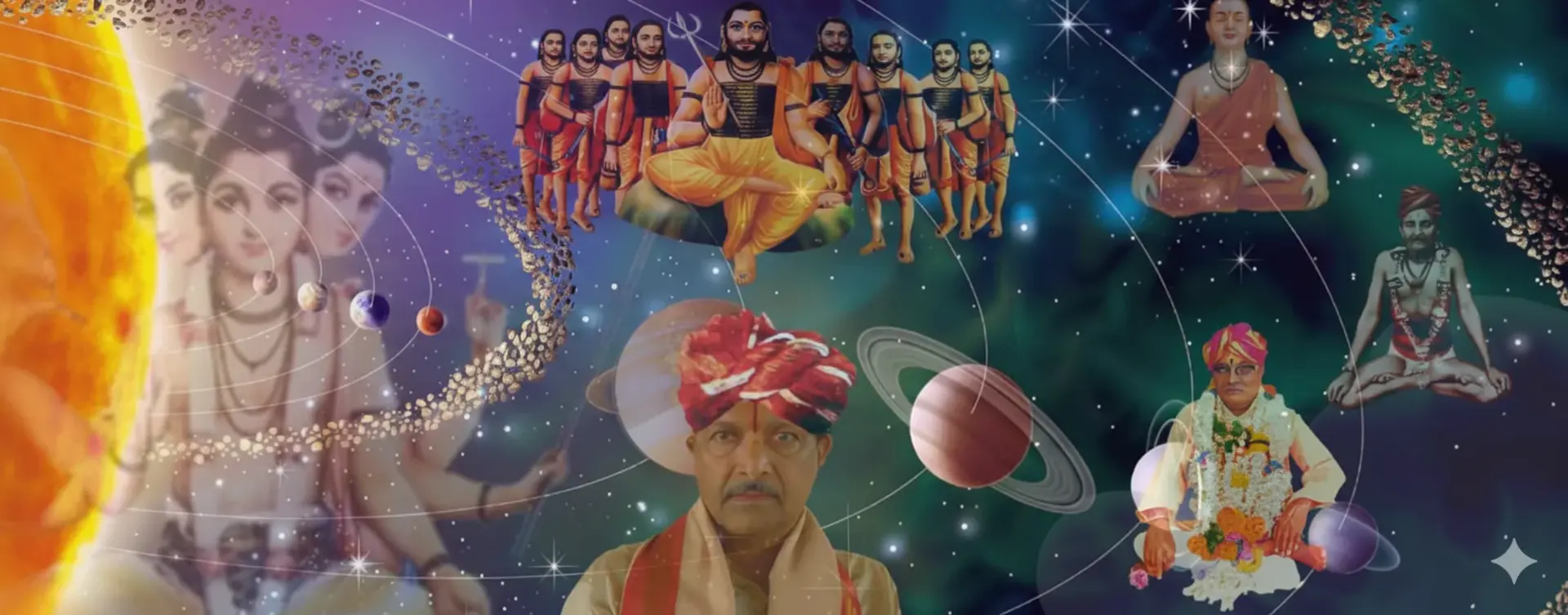
Yogeshwarananda Revananath, after defeating Yama, overpowering Shiva’s attendants, confronting Shiva himself, and finally receiving the seven life-essences from Vishnu, restored all seven of the Brahmin’s dead children to life. By returning to them the same bodies and the same destiny, Revananath demonstrated complete mastery over the five elements and the cosmic order. Only Revananath and the other eight Nathas — the Nine Nathas — are described in the scriptures as possessing such extraordinary, creation-shaping power. To influence Yama, Shiva, and even Vishnu reveals the unique divine authority of the Nath lineage.
After displaying this supreme cosmic power, Revananath addressed the people of Kali Yuga, giving teachings meant for all beings. These teachings arise from his original form, Chamsa Narayana, and hold deep significance for human life, conduct, and liberation. He taught that human life must not be wasted in worldly pleasures. The purpose of this birth is self-elevation, not comfort. A soul does not attain liberation in a single lifetime; until liberation is achieved, it must continue to be reborn. Pleasures of this birth do not return in the next. Worldly happiness is deceptive — suffering accompanies every birth. Therefore, one must adopt principles that elevate, not bind.
Origin of Varna and Ashrama
From the Cosmic Being (Virat Purusha) emerged the four varnas:
- From His mouth — Brahmins, governed by sattva.
- From His arms — Kshatriyas, dominated by sattva mixed with rajas.
- From His thighs — Vaishyas, ruled by rajas.
- From His feet — Shudras, influenced by tamas.
Similarly, the four ashramas arose:
- From His thighs — Grihastha (householder).
- From His heart — Brahmacharya (celibate student).
- From His chest — Vanaprastha (retirement / forest-dwelling).
- From His head — Sannyasa (renunciation).
Those who abandon the worship of the Lord — their true Father — and show disrespect toward Him fall away from both varna and ashrama, sinking into ignorance. Many women, Shudras, and others have drifted away from divine stories, nama-sankirtana, and devotion. Those who know the path must compassionately bring these teachings to them.
Brahmins, Kshatriyas, and Vaishyas — by birth, Vedic study, and sacred rites — may reach the Lord’s feet. Yet even they become entangled in ritual results due to misunderstanding. Filled with pride, they consider themselves learned while remaining ignorant of true action. They chase praise, heaven, and worldly benefits. Rajasik desire drags them downward. Their anger becomes serpent-like. Such people mock saints and claim worldly enjoyment is the highest happiness.
They perform sacrifices without sincerity, killing helpless animals merely for food, blind to the sin of violence. Pride in wealth, status, scholarship, beauty, strength, and lineage clouds their understanding. They insult saints and even God. The Vedas teach that the Lord pervades all beings like space and dwells as the Self, yet they twist scripture to justify desire.
Eating meat, drinking alcohol, and sensual indulgence arise from natural tendencies. The Vedas do not encourage these — they regulate them to prevent chaos. Ritual is meant to guide people away from indulgence, not toward it. Wealth is meant for dharma, and dharma leads to realization and peace. But people use wealth to fuel desire, forgetting death’s certainty.
Even in Sautramani Yajna, alcohol is not meant to be drunk — it is only smelled. Animals offered in ritual are meant to be touched, not killed. Union with one’s wife is meant for procreation, not indulgence. Misunderstanding these subtle rules, people believe themselves righteous while committing sin. They consume the flesh of beings they killed — in this or another birth.
Bodies perish; all bodies die. Yet people love only their own and hate others, forgetting that the Self in all beings is Hari. Such ignorance leads to darkness.
Those who have not attained liberation but are not entirely ignorant pursue only dharma, artha, and kama, neglecting moksha — thus they never attain peace. Desire destroys them; they die unfulfilled. Those who turn away from God fall into suffering, losing home, wealth, family, and ultimately falling into miserable states.
These were the teachings of Chamsa Narayana — Revananath, a being of limitless spiritual power and boundless compassion. Through the Nath tradition, his grace continues to uplift humanity. Even today, devotees feel his presence and blessings, making their lives meaningful. His teachings were given so that the people of Kali Yuga may purify themselves, rise spiritually, and eventually attain liberation.