How the Universe Functions
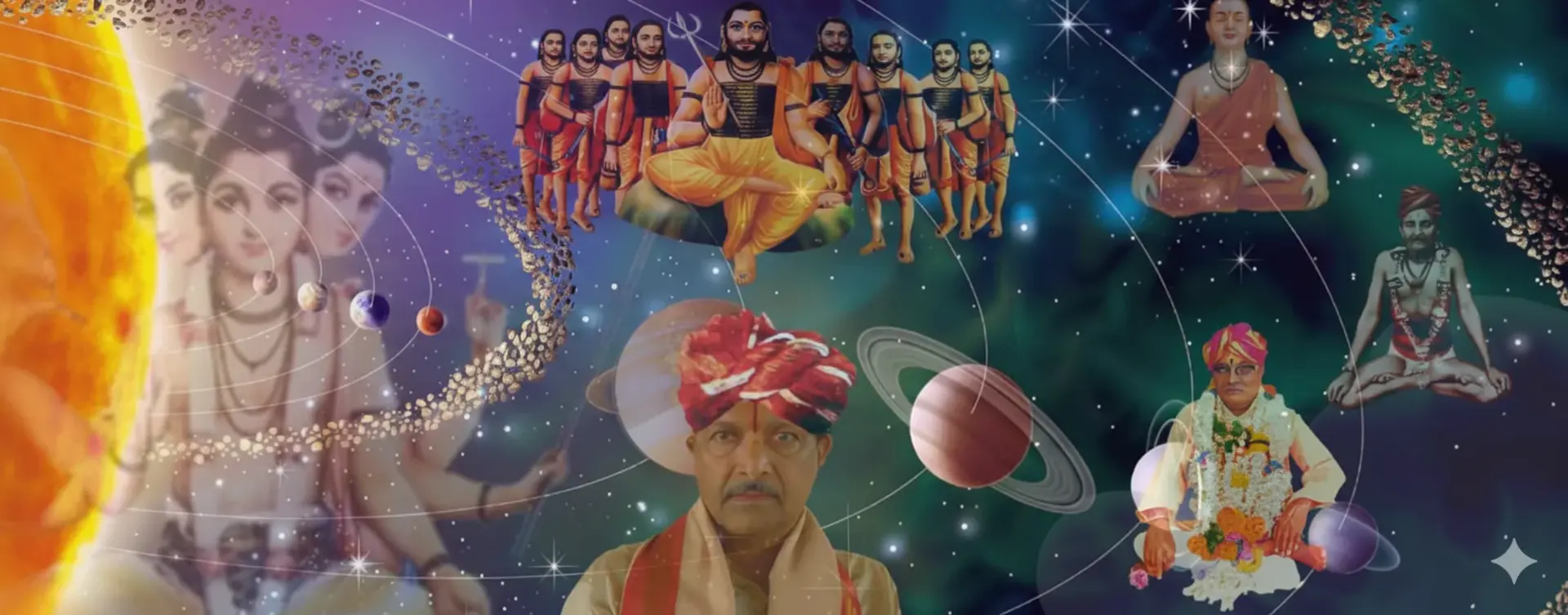
How the universe operates is indeed a great mystery. Such an enormous cosmos — yet we cannot see who runs it, nor do we understand how. It functions so smoothly and effortlessly that everyone wonders: how has it continued without interruption for ages, why does it never break down, and why is there no disorder? Everything in creation moves in an ordered, self-regulating, pre-planned manner, free from chaos.
To understand how the universe runs, we must examine the governing principles behind it. Below is the structure connecting cosmic functioning with human life.
The Working System of the Universe
Human life is only a tiny aspect of the cosmos. Yet the universe manages countless beings without relying on anyone — almost as though operating on its own.
The universe runs through a seven-fold management system, comparable to a vast cosmic administration or *business management* model. All human and cosmic activity may be studied through seven divisions:
- The Five Great Elements (Panchamahabhutas)
- The Four Varnas (natural archetypes)
- The Four Yugas (cosmic ages)
- The Four Innate Principles (Nija-Tattvas)
- The Four Innate Qualities (Nija-Gunas)
- The Twelve Houses of the Birth Chart
- The Twelve Zodiac Signs governing Yoga (fortune) and Bhoga (life-experience)
Each division functions independently yet remains interconnected like links in a chain. Because of this harmonious interconnection, the universe runs smoothly and without confusion.
Before studying the Five Elements and their influence on human life, we examine the philosophical foundation.
The Universe as a System of Principles
Although Hindu thought explained these principles, they are universal. They are not limited to religion, caste, or creed. The Sun, Moon, planets, stars, and the five elements belong equally to all beings.
Just as medical healing relies on principles rather than the doctor’s religion, the universe operates through laws, not beliefs. Rejecting these principles generally arises from ego or pre-formed opinions, not reason.
The Five Elements and Their Influence
Every being lives constantly under the influence of the five great elements:
- Earth (Prithvi)
- Water (Ap)
- Fire (Agni/Tejas)
- Air (Vayu)
- Space (Akasha)
Each being carries the characteristics of all five.
Earth Element (Prithvi)
Connected with desire, anger, pride, attachment, envy, ego, breath, smell, bones, flesh, nerves, hair. Zodiac signs: Taurus, Virgo, Capricorn.
Water Element (Ap)
Represents taste, attraction, emotions, intelligence, knowledge. Dominant quality: Sattva. Zodiac signs: Cancer, Scorpio, Pisces.
Fire Element (Agni/Tejas)
Symbolizes discipline, purity, brilliance, hunger, thirst, laziness, sleep, sexual drive. Zodiac signs: Aries, Leo, Sagittarius.
Air Element (Vayu)
Connected with the five pranas (Prana, Apana, Vyana, Udana, Samana), and with mind, intellect, ego, touch, movement. Zodiac signs: Gemini, Libra, Aquarius.
Space Element (Akasha)
Related to hearing, speech, sound, desire, anger, sorrow, delusion, fear. No zodiac sign corresponds to space.
The Four Varnas
The four archetypes — Brahmin, Kshatriya, Vaishya, Shudra — describe natural tendencies, not rigid social divisions.
The Four Yugas
The cosmic ages — Satya, Treta, Dvapara, Kali — each carry distinct vibrations influencing beings living in them.
The Four Innate Principles (Nija-Tattvas)
These four fundamental principles — earth, water, fire, air — exert an intrinsic influence on a person’s life and mental states.
The Four Innate Qualities (Nija-Gunas)
Every being carries four innate qualities:
- Sattva
- Rajas
- Tamas
- Sam (equilibrium)
These shape temperament, tendencies, and behaviour.
The Birth Chart (Janma Kundali)
A birth chart has twelve houses, each governing specific life-areas. Their interaction with planetary placements determines experiences and outcomes.
The Twelve Zodiac Signs
All human beings fall under twelve zodiac signs through which the universe regulates individual growth, destiny, and experiences.
This is only a foundational explanation. These concepts, along with their deeper applications, are discussed extensively in the book “Ha Khel Prarabdhacha ki Purvasanchitacha?” published by Shaktipith and blessed by Jagadguru Shankaracharya of Karvir Peeth. These principles serve as the base for understanding universal forces, deities, and cosmic action, as discussed in this article series.