Guru Shapes Masters
Introduction: This chapter explains how a Guru prepares a disciple to become a future Guru. Such transformation happens not in public gatherings but in deep inner connection, silence, and one-to-one transmission.
Guru–Disciple Oneness
The relationship grows through:
* close association * inner guidance * silent communication * spiritual absorption
Just as husband and wife begin to think alike through long companionship, a Guru and disciple become inwardly identical— but at a far deeper and subtler level.
When the disciple sits alone, he naturally aligns with the Guru’s consciousness.
How the Guru Decides Successors
Only the Guru knows:
* each disciple’s potential * how far they can be elevated * who is ready for responsibility * who must remain in personal practice
When a disciple becomes fully prepared, the Guru himself raises him to the Guru-seat. This is a private spiritual event, not a public ceremony.
Approval from followers or family has no role.
Nath tradition appoints successors based solely on:
* spiritual attainment * command from the lineage * divine sanction
Public Opinion Is Irrelevant
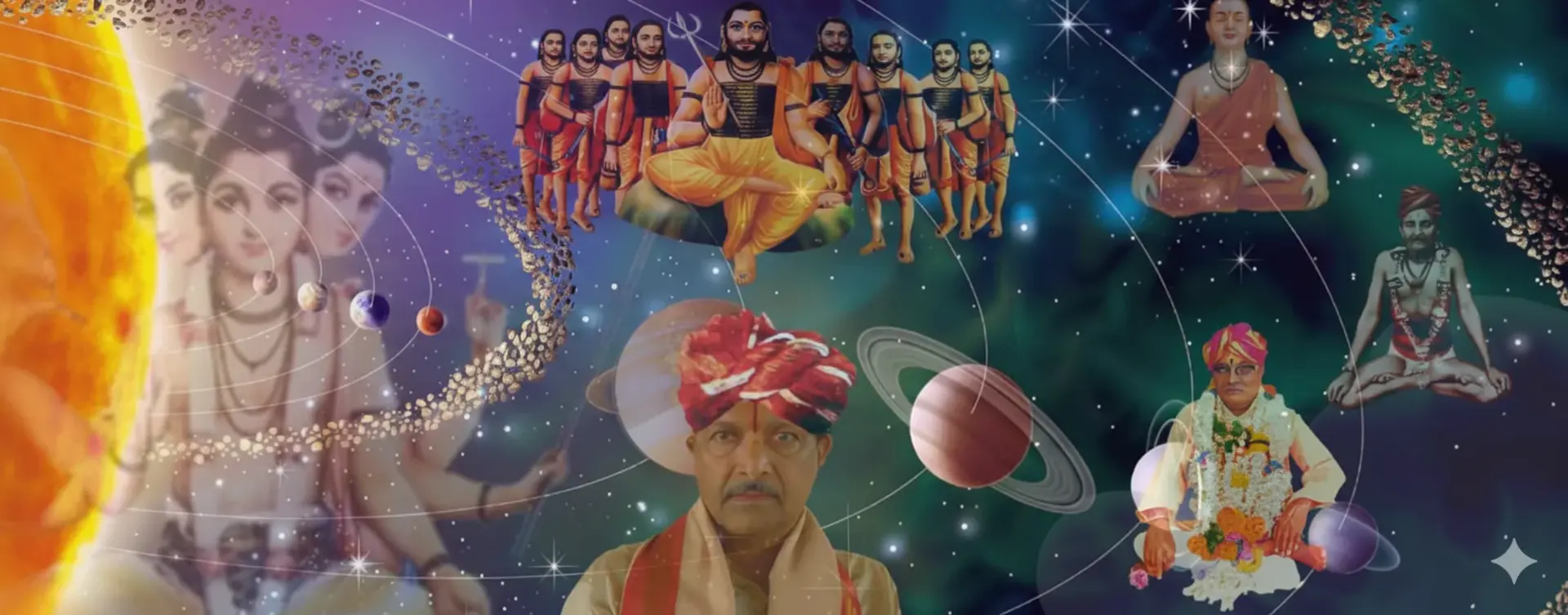
Guru-work is not a social institution. It is a cosmic chain reaching back to:
* Lord Shiva * Lord Vishnu * Lord Dattatreya * Machchhindranath
Therefore it does not depend on:
* majority vote * popularity * emotions of followers * rituals or festivals
Even if society rejects a Guru, the lineage remains untouched.
True Discipleship
Disciples kept for meditation or service are not involved in cosmic Guru-work. Only those who receive inner sanction rise to Guruhood.
A disciple may say, “I am one with my Guru,” but it becomes true only when the Guru declares:
“You and I are one.”
The Private Appointment of Vyankatnath
Madhavanath tested Vyankatnath repeatedly. One dawn, Madhavanath completed all tasks usually done by Vyankatnath.
When Vyankatnath woke, he apologised. Madhavanath became intense and said:
“Sit on the Guru-seat!”
Vyankatnath resisted, but the Guru’s order had to be obeyed.
In total secrecy, before sunrise, Madhavanath transferred the full spiritual power to Vyankatnath:
“My divine light will live in you. Whoever serves you serves me.”
No crowds, no ceremony— only Guru and disciple in full unity.
Why Gurus Ignore Old Followers
When a disciple becomes a Guru, the previous generation of followers is no longer his responsibility. Their progress happened under the earlier Guru.
The new Guru must focus on:
* cosmic work * future seekers * preserving the lineage * guiding prepared souls
Old followers may resist change, but that does not affect Guru-work.
Responsibility of Seekers
Seekers should:
* unite with the Guru’s path * avoid ego-based conflicts * not oppose the Guru-appointed successor * understand that lineage decisions are cosmic, not social
Opposing the Guru’s plan halts spiritual progress.
Essence
A Guru shapes the next Guru through:
* silent training * divine testing * inner empowerment * complete surrender
Only when the disciple becomes one with the Guru’s consciousness is he recognised as a Brahmand Nayak — a master whose influence spans countless universes.