Experiencing Gurucharitra Even Today
When we speak of *Gurucharitra*, we immediately remember *Datta Jayanti*. The Datta-charitra is traditionally read during a week-long “saptah,” where devotees engage in strict discipline—food restrictions, behavioral rules, and purity of mind and body. When we see the sacred book, the picture of Lord Dattatreya on its cover naturally brings His remembrance, and we begin reading with devotion.
While reading Gurucharitra, a special atmosphere forms around the home—pure, sacred, inwardly peaceful. We become absorbed in the stories of the three incarnations of Lord Dattatreya:
- Shripad Shrivallabha
- Narasimha Saraswati
- Dattatreya Himself
As the stories are woven together, we become immersed in the narrative, often chanting with a natural rhythm. But while trying to complete each day’s allotted chapters, we sometimes fail to grasp the deeper message. We read mechanically, focusing more on finishing the day’s reading than understanding what the Lord is communicating.
In truth, the *entire* Gurucharitra is spoken by Lord Dattatreya Himself. But because the text often uses the words “Shri Guru,” “Guruswami,” or simply “Guru,” our mind keeps imagining a human Guru. Thus we unconsciously separate “Guru” and “Dattatreya,” although the text repeatedly says, *“Shri Guru said…”* We fail to realize that Lord Dattatreya Himself is narrating, that He is present before us while reading, guiding our life.
Because of this mental separation, after completing the reading we do not retain the feeling that *“Lord Dattatreya was truly before me.”*
Instead, we imagine we merely read a holy book in front of an invisible God somewhere far away.
But this is an error of our understanding.
Lord Dattatreya is Smrutirgami — He appears the very moment we remember Him. Just thinking of Him, or even the name “Datta”, brings Him directly before us. This is His eternal nature.
To read Gurucharitra properly, we must maintain the inner attitude that:
- Lord Dattatreya Himself is present here, listening, guiding, blessing.
With this attitude, true spiritual transformation occurs. Without it, transformation comes only slowly—perhaps in another birth—until eventually the soul becomes ready for the grace of the Sadguru.
Reading Gurucharitra and worshipping Lord Dattatreya brings the blessing of a true Guru, and when a Guru arrives in one’s life, the awareness gradually dawns that:
- Every Guru is a manifestation of Lord Dattatreya.
Today many types of Gurus walk in society. All of them, in their own way, are reflections of Lord Dattatreya. But every disciple must develop purity, sincerity, and inner discrimination to recognize the right Guru for them.
As long as we fail to meet the Guru’s expectations, we cannot merge with Him. Without merging, spiritual progress does not begin. Even Gurus who are not from an unbroken lineage still guide through behavior and inner connection. If we can truly align with them, progress is assured—but for this, one must be steadfast like *Bhakta Prahlada*.
When a Guru from an unbroken Nath–Datta tradition arrives, the experiences become even more unmistakable. But our own mind deceives us through doubt and comparison—by questioning our Guru or envying the progress of Guru-brothers, we distance ourselves from grace.
Because Gurus appear in human form, our mind doubts them: “He is a mortal person like me.” But such thoughts prevent spiritual elevation.
One who merges with the Guru progresses steadily, receives His grace, and eventually attains the state of Guruhood.
Often while reading Gurucharitra, doubts arise, but we rarely seek clarification. Yet the Sadguru constantly reveals His identity through subtle experiences.
Experiences with Vyankateshnath Maharaj
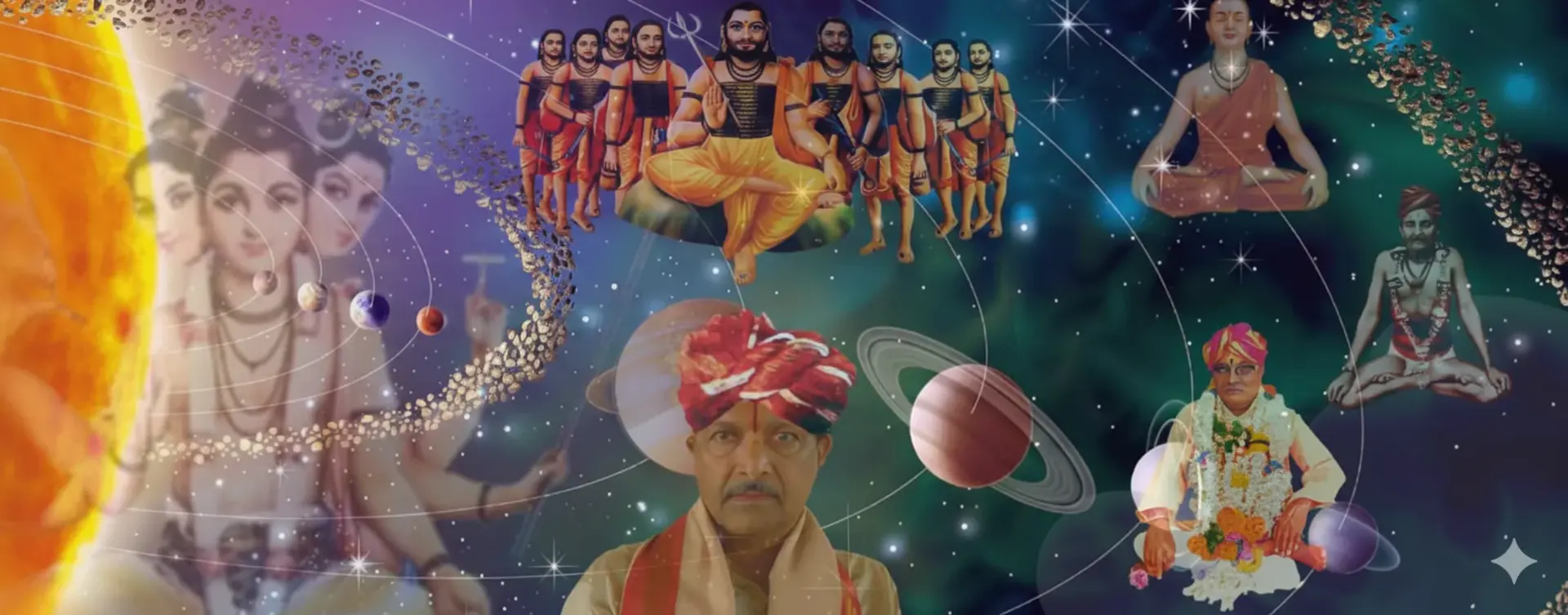
Vyankateshnath Maharaj, the fifteenth Nath in the unbroken Guru lineage from Lord Dattatreya through Machhindranath, lived a simple life outwardly but possessed divine power equal to Dattatreya Himself.
He guided people naturally through everyday conversations and actions, showing them the path of inner upliftment.
Once, while staying at Narendra’s home, Maharaj—who was elderly and physically weak—asked Narendra to give him a hand while rising. Narendra, thinking he must use strength to lift the Guru, held his hand firmly and tried to raise him. Maharaj sensed the inner attitude and decided to teach him a lesson.
He sat back down and said playfully, “If you have so much strength, lift me now.” Narendra tried hard but could not move him even slightly. He called others—four or five men together tried, but Maharaj did not budge. Finally they bowed at his feet. Maharaj smiled and said, “Just give me your hand lightly, without effort.” Narendra did so, and Maharaj rose instantly—showing that physical strength is irrelevant before yogic power.
Maharaj Demonstrates Yogic Transport
In Pune, several visitors asked Maharaj whether the yogic feats described in Gurucharitra—such as the Guru transporting the weaver to Srisailam in an instant—were still possible.
Maharaj said calmly, “Yes, it is possible.”
They asked, “Will you take us somewhere?”
Maharaj replied, “Because you still have doubt in your mind, I will take you—but from where you are left, you must return by