The Intense Spiritual Power of Jnananath
In the twenty-seventh chapter of the *Gurucharitra*, the doctrine of *karma-vipaka* (the fruit of past actions) is explained. Two Brahmins once approached Shri Guru demanding a debate on the Vedas and insisted that He issue a written declaration of victory. Though Shri Guru tried in many ways to gently explain the truth to them, they refused to listen. At that moment, Shri Guru called a passerby, drew seven lines on the ground, and asked him to step across them one by one. As he crossed each line, Shri Guru narrated the story of the man’s life in that particular birth, demonstrating how karma unfolds across lifetimes. Likewise, Dnyaneshwar Maharaj (Jnananath) later showed similar mastery over the cycle of births. He asked a bull-calf to cross seven lines, and as the animal stepped over each one, it revealed the identity of its previous births—just as the passerby had done. Although Dnyaneshwar was born in a household (unlike the earlier Nath yogis), He possessed the same degree of perfected yogic power. He proved that birth circumstances do not limit true spiritual attainment.
Changdev and His Encounter with Jnananath
Changdev was a great yogi—not a Nathpanthi, but a powerful Hatha Yogi. According to the scriptures of Kali Yuga, human lifespan is up to 120 years, yet Changdev lived for fourteen hundred years by repeatedly avoiding death through yogic mastery. When news of the young Jnananath’s extraordinary fame reached him, Changdev felt challenged. “How can a boy be more renowned than me?” he wondered. Determined to display his power, he set out to meet Jnananath. One morning, Jnananath and His siblings were sitting upon a dilapidated old wall in their village. Changdev approached riding a ferocious wild tiger, using a venomous serpent as a whip, and flying through the air to display his yogic prowess.
Seeing this, Jnananath casually said to the crumbling wall beneath Him, “Come, Mother Wall, a great yogi has arrived—let us walk forward to welcome him.” Immediately, the wall stood up and began walking, carrying the siblings straight toward Changdev. Witnessing this impossible sight, Changdev was stunned. He had mastered wild animals—but here was a yogi who commanded lifeless matter itself. Realizing the incomparable greatness of Jnananath, Changdev surrendered at His feet. Just as the original Nine Nathas (Navanathas) demonstrated mastery over the five elements—earth, water, fire, air, and ether—Jnananath too displayed the same divine authority. With one mere glance, the 1400-year yogic achievement of Changdev dissolved completely. Such is the effortless power of a yogeshwara. To show control over nature is entirely natural to them.
The Bull That Recited the Vedas
Another example of Jnananath’s miraculous authority over life: To remove false accusations placed upon His father, Jnananath went to the Brahmins (bhudevas) seeking a purification letter. Because of His young age, the priests mocked Him. They asked Him His name. He replied, “Jnanadeva.” At that moment, a farmer passed by with his bull. The Brahmins asked the farmer the bull’s name. He said, “This bull is also named Jnanadeva.” Mockingly, they told the saint, “If both of you share the same name, you must be equal. If you claim to know the Vedas, then let this bull recite them as well!”
Jnananath calmly replied, “Yes, he will recite them.” He drew seven lines before the bull—each representing one of its previous births. As the bull crossed each line, Jnananath declared what form the bull had in that birth. Upon crossing the seventh line, He said, “In your seventh previous birth you were a Yajurvedic Brahmin who recited the Vedas. Now recite them again.” Immediately, the bull began chanting the Vedas flawlessly. The Brahmins were dumbstruck. Realizing their folly, they said, “We cannot give you a purification letter,” and walked away in shame.
The Lineage and Continuity of the Nath Tradition
In the first example, Jnananath demonstrated mastery not only over living beings but also over inert matter—a walking wall. A 1400-year-old yogi became His disciple. In the second example, a mere bull recited the Vedas, though it had no human faculties. These powers are identical to those demonstrated by the ancient Navanathas. The knowledge received by Jnananath from Nivrittinath manifested openly before all, proving the unbroken power of the Nath lineage.
After Jnananath, explicit incarnational power diminished, and spiritually great beings began to take birth within normal families. Lord Dattatreya Himself tested these saints and guided them. Behind every working Sadguru stands the entire Nath lineage with its full spiritual force. Although today’s lifestyle, dress, language, and rituals differ from ancient times, the power and purpose of the Nath tradition remain unchanged. The Nath masters had already established a complete spiritual system whose effect continues even now.
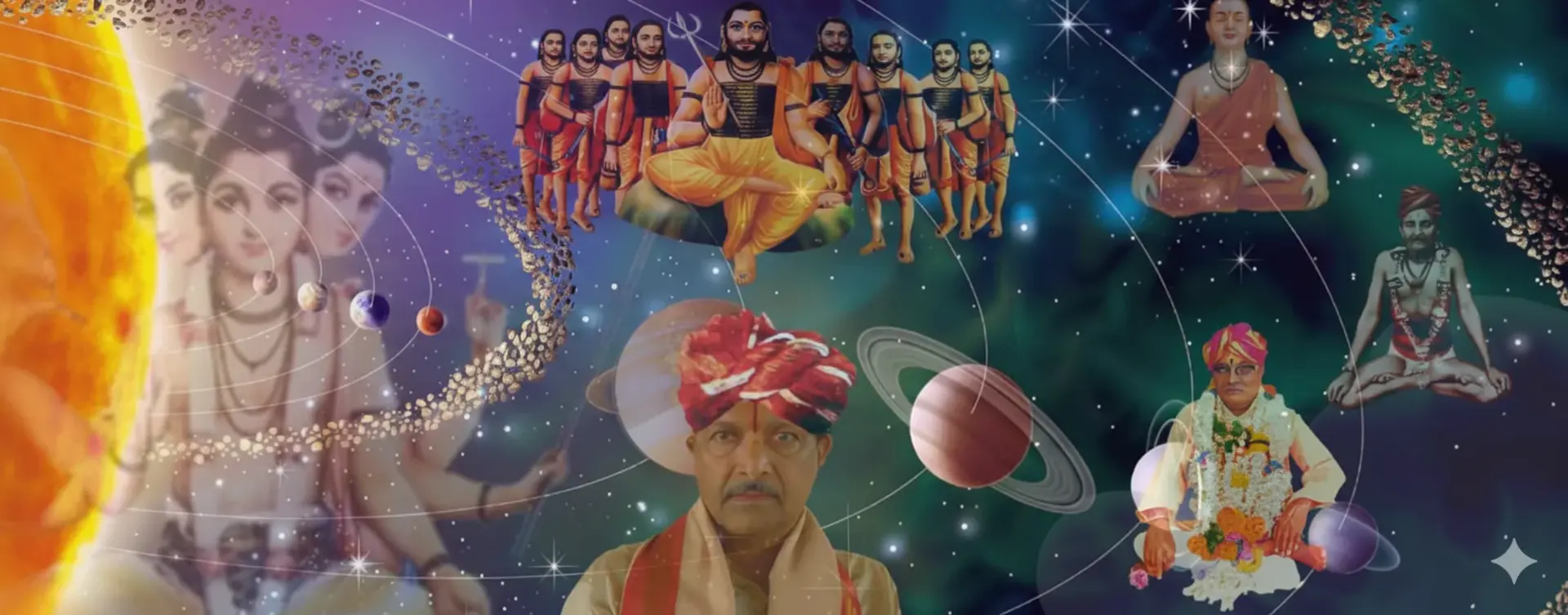
Jnananath instructed Satyamalanath to carry forward the Guru’s work. From him the power passed to Guptanath, then Paramhansa, Brahmananda, Paramananda, Kashinath, Vitthalnath, Vishwanath, Madhavanath, and Vyankateshnath. This unbroken chain maintained the same spiritual potency up to Mahashivaratri of 1993—and continues even today. Few people desire liberation; many chase wealth and fame, forgetting the true value of life. But the Nath tradition continues its mission with full intensity and purpose: to uplift the soul and liberate humanity.