Dnyaneshwar Maharaj — The Bull That Recited the Vedas
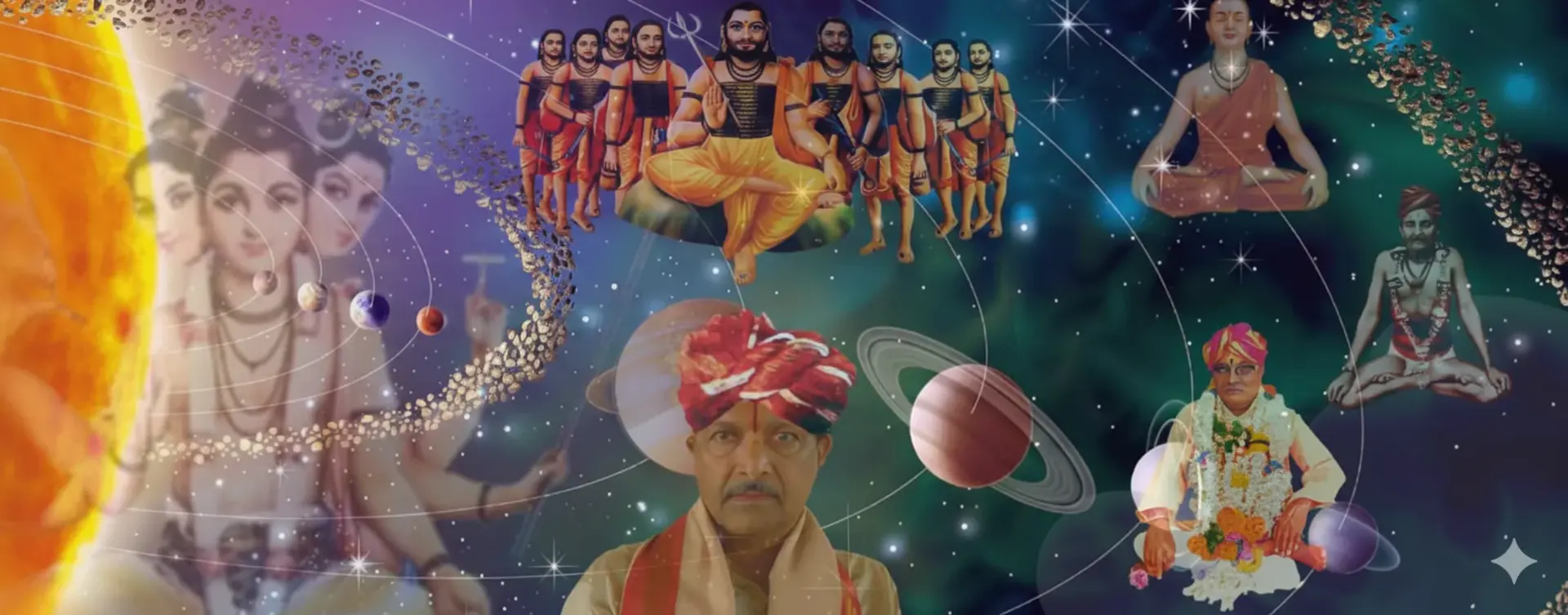
In the life of Shri Dnyaneshwar Maharaj, there is a well-known event illustrating His divine authority. When Lord Shri Krishna designed the Nath tradition, it was decided that the nine attendants of Narayana would incarnate as the Nine Nathas. Understanding the purpose, structure, and guru–disciple lineage of the Nath Panth, both Lord Shiva and Lord Vishnu longed to take birth within this tradition. Lord Shiva declared, “I shall incarnate as Nivrittinath,” and Lord Vishnu said, “I shall incarnate as Jnananath. I will serve My Guru and participate in the work of the Panth.” Thus, according to this divine plan, Jnananath was the incarnation of Lord Vishnu Himself.
Shri Dnyaneshwar Maharaj is one of Maharashtra’s greatest saints. His life redirected the Nath tradition from mere Hatha Yoga towards the devotional path (*bhakti-marga*). However, during His time, Brahmins expelled Him and His siblings from society, labeling them “sons of a sannyasi” and therefore impure. Seeking a *shuddhipatra* (purification certificate) from the learned Brahmins, Nivrittinath, Dnyaneshwar, and their siblings were travelling through Paithan. There, a few scholars decided to mock them.
They stopped a man walking by with a bull. “What is this bull’s name?” they asked. The man replied, “Jnandev.” The scholars then ridiculed the saint: “If the bull is Jnandev and this boy is also Jnandev, then striking the bull should injure the boy!” They hit the bull with a stick — and instantly the marks appeared on Dnyaneshwar Maharaj’s back. Instead of accepting His supernatural power, they assumed it to be magic.
They continued mocking Him: “If you claim to be a Brahmin, can you recite the Vedas?” Dnyaneshwar replied, “Yes.” The scholars taunted, “Then let this bull recite them too. After all, his soul and your soul are the same.” Dnyaneshwar called the bull near Him and reminded it of its seven previous births. He said, “In your previous birth you were a Brahmin and a Vedic scholar. You used to chant the Rigveda. Do you remember?” The bull nodded. Dnyaneshwar instructed, “These learned men wish to hear the Vedas from you. Now recite them.” Immediately the bull began chanting the Vedas perfectly, with clear articulation, by the spiritual influence of Dnyaneshwar Maharaj.
This story is widely known. It shows Dnyaneshwar could perceive the entire karmic journey of that living being and awaken its latent samskaras. As an avatar of Vishnu and a true Sadguru, He understood the soul’s past-life impressions and spiritual history. To demonstrate this truth, Jnananath drew seven lines on the ground, each representing one past life, and instructed the bull to cross them. After crossing the final line, He said, “In this birth you are a bull, but in your past birth you were a Vedic Brahmin. Recall your knowledge and chant the Vedas.” The bull obeyed.
This shows a profound truth: the outer form — animal or human — does not change the inner soul, which carries impressions from countless births.
The Nath Tradition and the Journey of the Soul
Matsyendranath inaugurated the Nath Panth, and Jnananath (Dnyaneshwar) is among its most luminous links. From this incident we understand that the journey of the soul is continuous. The soul (*jiva*) enters a body at conception and carries forward all accumulated karma.
The bull’s seven previous lives, revealed by Dnyaneshwar Maharaj, showed how a soul moves through various forms due to karma-dosha (consequences of past actions). Similarly, Narada Muni transformed the robber Valya into the sage Valmiki, and in the *Gurucharitra*, Lord Dattatreya uplifted the washerman (Rajaka), making him king of the Mlechchha kingdom. Such karmic patterns cannot be understood by ordinary people, but observing a soul’s circumstances offers clues about its past actions.
From these examples we learn that heaven is not the goal; it is merely a temporary reward. Becoming attached to such pleasures obstructs spiritual progress. Without the Guru, liberation is impossible. Only through the Guru’s guidance and service can the soul ascend.
The ultimate purpose given by the Creator is: the upliftment of the soul and its journey toward liberation. Understanding this, one should perform virtuous actions, remain in the Guru’s service, and align one’s life with divine guidance.