Nath Shaktipeeth – Mahashivaratri Festival
“Sham karoti iti Shankaraḥ” — the one who does good to all beings, who brings auspiciousness and welfare, is *Shankara*. Lord Shiva governs creation, preservation, and dissolution. He is also the originator of Sanskrit grammar. According to tradition, when Shiva performed the cosmic dance, he struck his drum fourteen times — these became the fourteen foundational sounds (*Maheshwara Sutras*) of grammar.
Shiva is the eternal consciousness (*Purusha*), while Goddess Parvati, Mother of the Universe, is *Prakriti* (Nature). Even the ashes from a funeral pyre become holy when they touch Shiva — such is His divine power.
Shiva is the source of knowledge, incomparable in strength, and the embodiment of intense renunciation. He responds quickly to sincere devotion, and even unintended worship done with a pure heart can please Him. He protects His devotees, even chastising their enemies when needed.
The poet Pushpadanta writes in the *Shiva Mahimna Stotra* that even if the oceans were ink, the earth were paper, the branches of the wish-fulfilling tree were pens, and Goddess Saraswati wrote forever — even then the glory of Shiva could not be fully described.
Because Shiva is worshipped by gods, demons, and humans alike, Mahashivaratri — the night of Shiva — is one of the holiest festivals dedicated to Him.
—
The Famous Deer and Hunter Story
A well-known story from the *Shiva Purana* illustrates Shiva’s compassion:
A hunter once climbed a *bilva* (bael) tree waiting for prey. He had not eaten the entire day. A herd of deer arrived to drink water. As he prepared to shoot, one deer stepped forward and requested:
*“Allow me to meet my family once before I die. I give you my word that I will return.”*
Hearing the sincerity, the hunter agreed. While waiting, he absent-mindedly plucked and dropped bael leaves from the tree. These leaves fell upon a Shiva Lingam beneath the tree. Unknowingly, he performed Shiva worship on the sacred night of Mahashivaratri.
One by one, the deer returned — the stag, the doe, and even the fawns — each offering itself in place of the other. Seeing their devotion to duty, the hunter’s heart melted. He realized that as a human, he must uphold compassion. He spared their lives.
Lord Shiva, pleased with both the deer’s truthfulness and the hunter’s compassion, granted blessings. The deer attained a celestial form (*Mriga constellation*), and the hunter became associated with the *Vyāghra constellation*.
This event took place on Mahashivaratri.
—
The Story of the Deadly Poison (Halahala)
During the churning of the cosmic ocean (*Samudra Manthan*), many divine gifts emerged — but also the deadly poison *Halahala*, capable of destroying the universe.
Only Shiva could neutralize it. He drank the poison to save creation. The poison turned His throat blue (hence the name *Neelkantha*). To ease the burning caused by the poison, the gods kept Him awake by singing and dancing throughout the night.
This sacred night became known as Mahashivaratri.
—
Nath Shaktipeeth and Mahashivaratri
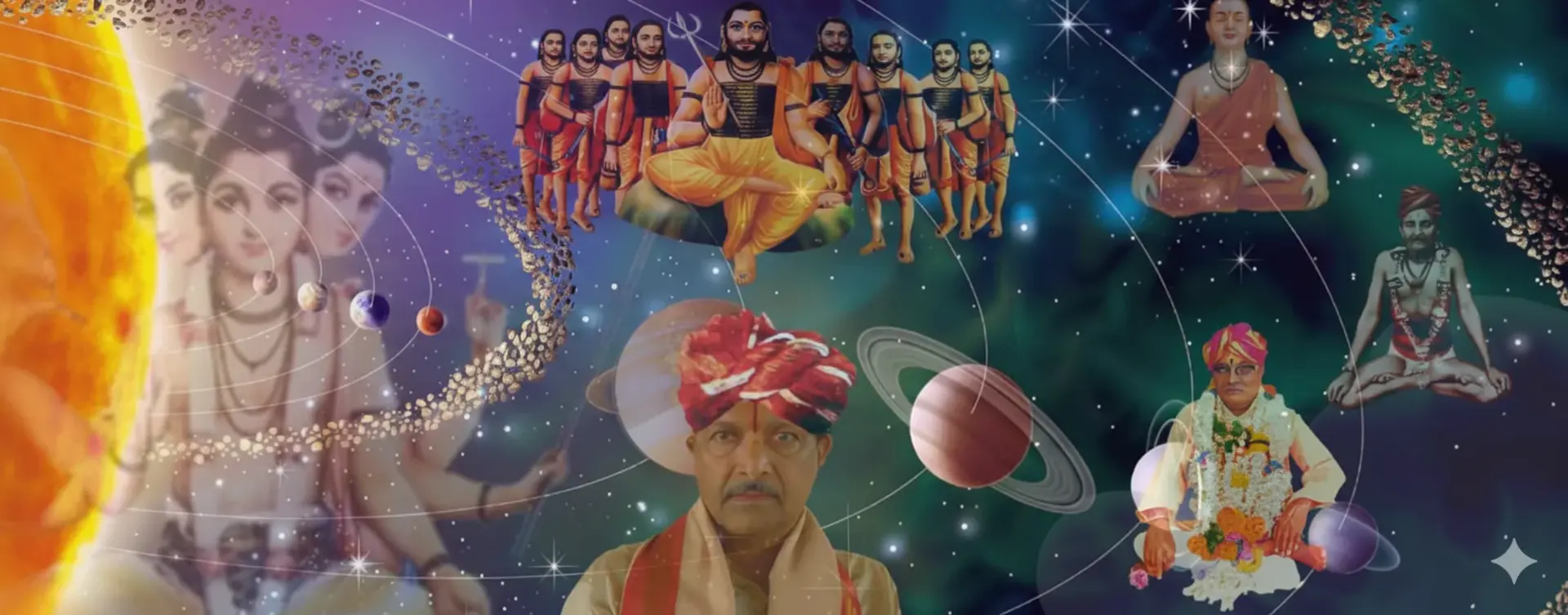
Mahashivaratri is deeply significant for the Nath Shaktipeeth. On this very day in 1993, P. P. Shri Vyankatanath Maharaj—the 15th Guru of the Nath lineage from Machhindranath— took *Mahasamadhi* after informing His disciple P. P. Shri Narendranath Maharaj 18 years earlier that He would leave His body on this day.
Thus, from Mahashivaratri 1993 onward, Shri Narendranath Maharaj formally began the Guru and Nath tradition’s spiritual work.
Because of this, Mahashivaratri is the most important festival at Nath Shaktipeeth.
—
Rituals at Nath Shaktipeeth
Six major annual festivals are celebrated here. During Mahashivaratri:
* Prahar Puja is performed from sunset to sunrise. * Shri Narendranath Maharaj performs rituals for Lord Shiva in the Shakti Darbar. * Continuous chanting of Rudra, Rudrasookta, and Shiva Mahimna Stotra is done. * A sacred Maha-Abhishek is performed with bael leaves (bel patra). * Devotees observe night-long vigil (*jagaran*).
A special midnight Havan (1:10 AM to 1:00 AM) is conducted using sesame seeds, bael wood, and bael leaves.
Throughout the night, Shri Narendranath Maharaj plays the harmonium and leads the traditional Nath devotional hymns known as Swananda Sudha. These hymns bring peace, dissolve mental stress, and enable spiritual insight.
Next morning, the rituals conclude with:
* Rudrabhishek * Puja of Shri Vyankatanath Maharaj * Maha Aarti * Feast (Parna) for devotees
—
Spiritual Energy on Mahashivaratri
According to yogic science, on this night a powerful natural energy flows in the Northern Hemisphere. Only humans—with an upright spine—can receive this energy. By sitting with the spine erect and meditating on Shiva, this cosmic energy rises through the subtle channels. Therefore, night-long vigil is considered spiritually beneficial.
—
Why One Should Observe Mahashivaratri Vrat
For those seeking:
* Peace, happiness, and contentment * Marriage or an ideal life partner * Success in education * Fame or achievement * Removal of past sins * Protection from untimely death * Financial stability * Resolution of disputes or legal problems * Spiritual upliftment
Mahashivaratri Vrat is recommended.
Tradition says that Lord Shiva performed His divine marriage and even manifested in the form of a Shiva Lingam on this day.
How To Observe the Vrat
* Keep a full fast (water only if possible; otherwise fruits or simple fasting food). * Perform three Abhisheks during the night using milk, Panchamrut, and water. * Offer bael leaves while chanting “Om Namah Shivaya”
or reciting Rudra or Shiva Mahimna Stotra.
* Perform Havan at midnight (Nishitha Kala) with sesame seeds, bael leaves, and sacred wood. * Sing devotional hymns between rituals. * After sunrise, perform concluding rituals and offer Prasad.
Every year, Nath Shaktipeeth observes Mahashivaratri in this traditional manner, and all devotees are invited to participate.